

Epilepsy: My Story
To a doctor, epilepsy is a neurological disorder marked by sudden episodes of sensory disturbance, loss of consciousness, or convulsions caused by abnormal electrical activity in the brain. But what is epilepsy to the person actually living it?
I’m John. I’ve dealt with epilepsy for over three decades now — 21 years of active, unstoppable seizures, followed by 16 years and counting completely seizure-free. I’m also a certified peer recovery specialist. This is the full version of my story, updated with everything I didn’t include the first time I wrote thi
(This is an informational and personal experience article only and it is best to talk to your neurologist, nurse, or local doctor for more specific information on your diagnosis.)
As a kid I never understood why I deserved this
I was eight years old, watching Saturday morning cartoons, when I had my first seizure. Back then people just called it a “grand mal.” Now it’s called a tonic-clonic seizure. For most of my childhood, my seizures only happened at night while I was asleep — which honestly felt like a good thing at the time, because to my young mind, having epilepsy was a scary embarrassment. I felt different from my friends. I didn’t feel like a normal kid.
My doctors told my parents there was a good chance I’d grow out of it. My parents believed that, and because of it, epilepsy wasn’t taken as seriously in my house as it should have been. I didn’t want to believe I wasn’t normal either, so I started skipping medication doses, convinced that a few good months meant I was cured.
I need every person reading this to understand something clearly:
Epilepsy is not curable. You can treat it. You can get it under control. But cured and controlled are two completely different words. I’ve had mine under control for 16 years — not cured, controlled.
By seventh grade, I’d gone about three months seizure-free and decided that meant I was fixed. I stopped taking my medicine entirely. It “worked” for a few more months — until I had a full seizure in the middle of history class, in front of the entire room. That was the beginning of a very different kind of childhood.
Middle School, High School and Being "that kid"
After that seizure in class, everyone knew. That was the start of years of bullying. My seizures had also left me with a learning disability in both math and English, and bullies are good at finding exactly where you’re weakest — my learning problems combined with everyone knowing about my seizures gave them plenty to work with. The last six years of school turned into something close to a nightmare. As a preteen, I had no idea how to respond to being bullied, and that made it so much worse.
If the adults around me — parents, doctors — were struggling to understand epilepsy, a middle school full of kids didn’t stand a chance. Nobody explained it to my classmates. Silence is exactly what let the stigma grow.
Action tip: if you’re a parent or teacher of a kid with epilepsy, explain it to their classmates early and plainly, more than once. It matters more than people think.
Those nighttime seizures also came with migraines that nothing seemed to touch — I could take Tylenol all day and it wouldn’t put a dent in it. If that’s you too, a few things that help people manage post-seizures can be found on Managing personal care after seizures post. And is a blog article about ways to avoid stress which is the 2nd leading case of siezures. Top Stress Relief Products for Epilepsy Managment
College, Depakote, and Losing My License Before I Even Had One
Like a lot of people my age, I was told college was the only real path forward — nobody talked about trades or anything else. So I went to a community college far from home, somewhere nobody knew my history yet. For a while, that felt like freedom.
But the seizures didn’t stop. My doctors put me on a high dose of Depakote. Back then, they didn’t check blood levels monthly the way they do now — you were just told “take this much” and that was it. The side effect that wrecked me most was exhaustion. I was sleeping 14 hours a day and could barely function outside of that, so I leaned on caffeine and soda to stay awake, even though I already suspected caffeine could be a trigger for me.
On top of that, most states require you to go something like six months seizure-free before you can even get a license. I never made it through that window during those years. No license meant no independence, and eventually I dropped out and moved back to a tiny town with nothing in it — no store, no activities, nothing to do if you don’t drive.
Jobs, Insurance, and Fighting for Disability
Through my late teens and twenties, I bounced from job to job, and went through a sizable number of dark roads and dead ends. My seizures weren’t getting better, and the medicine wasn’t working anymore. I never had a seizure at work, but that didn’t matter — insurance was still a nightmare. This was before insurers had to cover pre-existing conditions, and I watched family fight an insurance company for years over whether they even had to cover me as an adult.
Eventually I couldn’t afford my medicine without coverage. I applied for SSDI — Social Security Disability Insurance — and I want to be clear about why: it wasn’t about the money. I needed the Medicaid/Medicare coverage that came with it so I could keep seeing my doctor and getting my medication. That’s the part people miss about disability — for a lot of us, it’s about keeping access to care, period.
Deciding to Have Brain Surgery
Around 2004-2005, after years of testing, my doctors figured out my seizures were starting from one specific spot in my brain and spreading from there — different from people whose seizures come from electrical activity across the whole brain at once. Back then, treatment was pretty much down to two or three options total, and surgery to remove that spot was one of them.
I got offered the chance to have brain surgery, and most of my family was scared — worried about what would happen if it went badly. I understood their fear, but I was determined. I’d have tried almost anything at that point, so I said yes.
The process had a few stages:
- Monitoring — probes placed to find the exact spot where my seizures started. To make that happen, I had to come off my medication so a seizure would actually occur while I was being watched.
- A massive breakthrough seizure — without medication, mine was huge. I was put into a medically induced state for a few weeks on a breathing machine while I stabilized. I’m lucky I made it through that part.
- Recovery — getting fully strong again before they’d touch anything else.
- The resection — removing the damaged spot, which testing over the years suggested was probably from an old injury nobody ever diagnosed when I was a little kid.
The surgery itself went well, no complications. I want to say that clearly because I know “brain surgery” sounds terrifying — it can go well.
Recovery was its own battle. I was so weak my dad had to help me shower. And that period taught me something: people I’d assumed didn’t get it showed up exactly when it mattered. That doesn’t have to be a parent. It can be friends, it can be whoever chooses to show up for you.
New Triggers I Learned the Hard Way
Surgery cut down my seizures, but it didn’t erase them right away — and that’s realistic to expect. Some people go fully seizure-free after surgery. Others get a big reduction without full resolution. I was in the second group for a while.
This is where I learned two of my own personal triggers, directly:
- Caffeine — too much soda in too short a window, and I had a full seizure in public.
- Flashing lights — I never had a full seizure from this one, thankfully, but I learned to feel it coming and turn away in time. Haunted houses and unfiltered strobe effects became a hard no for me after that. (If this is you too, check my post on photosensitivity )
My seizures also shifted into something I started calling “blackouts” — I’d have one and wake up somewhere else in the house, or at a friend’s, with zero memory of moving. I ended up putting a slide bolt lock up high on my apartment door, out of reach, as a plain safety fix for that period.
When Medication Changes Mess With Your Mental Health
Switching anti-seizure medications can hit your mental health hard if it’s not managed carefully — and I don’t think that gets talked about enough.
I went through a few medication switches, including one that gave me a documented rage side effect — not something everyone gets, but it happened to me, in front of people, more than once. Later, during a cross-taper between two other meds, I started having hallucinations and panic attacks. I ended up in a mental health facility, and the ER there didn’t have an accurate record of the medication switch I was in the middle of — so they put me back on a prior medicine at full dose. That gap in information cost me weeks of unnecessary hell before I got transferred to a university hospital that actually understood what was happening and got me stabilized correctly.
Action tip: if you’re switching anti-seizure meds, make sure every provider you see — especially in an ER — has your exact, current medication list. A gap in that information is dangerous, and it happened to me. Two things that help with exactly this:
- Medical ID bracelet/necklace (seizure + current medication listed) – [add your link]
- Weekly pill organizer with alarm/reminder – [add your link]
It was during this same stretch that I got diagnosed with bipolar disorder, which honestly made a lot of sense once I looked back at years of mood swings.
(I go into managing mental health alongside epilepsy more in my post how to support your mental health when living with epilepspyon that covers this topic and is worth a read if this part hit close to home for you.)
The Day My Seizures Stopped: VNS Therapy
After that crisis, my team and I talked about a second brain surgery. I said no — I was too scared after everything that had already happened. Instead, they proposed something different: a device implanted in the chest, wired to the vagus nerve near the brainstem, built to sense a seizure starting and automatically fire back against it before it fully develops. I knew it at the time just as “the thing in my chest.” Now it’s known as VNS — vagus nerve stimulation.
Just knowing that help was coming was the biggest stress relief of my life. I still had small seizure-like episodes through that summer — eyes wide, mouth open, a strange sound, gone in seconds — but they got less frequent.
On August 22, 2010, I had my last seizure of any kind. My dad and I didn’t remember the exact date at first, so we picked September 1st as the day we’d celebrate every year instead. That’s 16 years and counting.
(I turned down VNS in September of 2010 because of my seizures stopping)
Becoming a Peer Recovery Specialist
Not long after, I got a kidney transplant tied to a family kidney condition, which freed up a huge amount of time and energy I used to spend on treatment. Around then, a coworker kept telling me about a local wellness center built on peer support — using your own lived experience with mental health or addiction to help someone else through theirs.
I started volunteering. A few months in, the center got funding to hire real staff. I interviewed, and somehow ended up managing the same wellness center I’d been volunteering at. That’s where my career as a peer recovery specialist actually started, and it’s been going ever since. I use my own experience with the stress and depression epilepsy caused me to help other people with epilepsy and mental health conditions know that a good life is still possible.
You're Not "Epileptic." You Have Epilepsy.
If you take one thing from this whole post, take this one:
You are not epileptic. You have epilepsy. It’s something you live with. It doesn’t get to be your whole identity. The way you talk to yourself about it changes how much power it has over you. Saying “I have epilepsy” instead of “I’m epileptic” is a small shift, but it builds real confidence over time.
Two Things I've Learned That Keep Me Moving Forward
I’ll leave you with the same two things that have kept me going through all of this:
Doing the same thing repeatedly but expecting new results is the definition of insanity. Never be afraid of trying something new — you don’t know the result until you do it.
And: there may be hard periods of life, but life never stays the same. It’s always full of new choices with new results.
If you’re living with epilepsy, drop your story in the comments below. I read every one, and it’s a real part of doing this work well — because even with active epilepsy, a full, good life is possible.
(Want more on staying mentally strong through all of this long-term? I wrote about that in more detail in Building Resilience: Mental Toughness Strategies for Long-term Epilepsy.)
(This is an informational and personal experience article only and it is best to talk to your neurologist, nurse, or local doctor for more specific information on your diagnosis.)
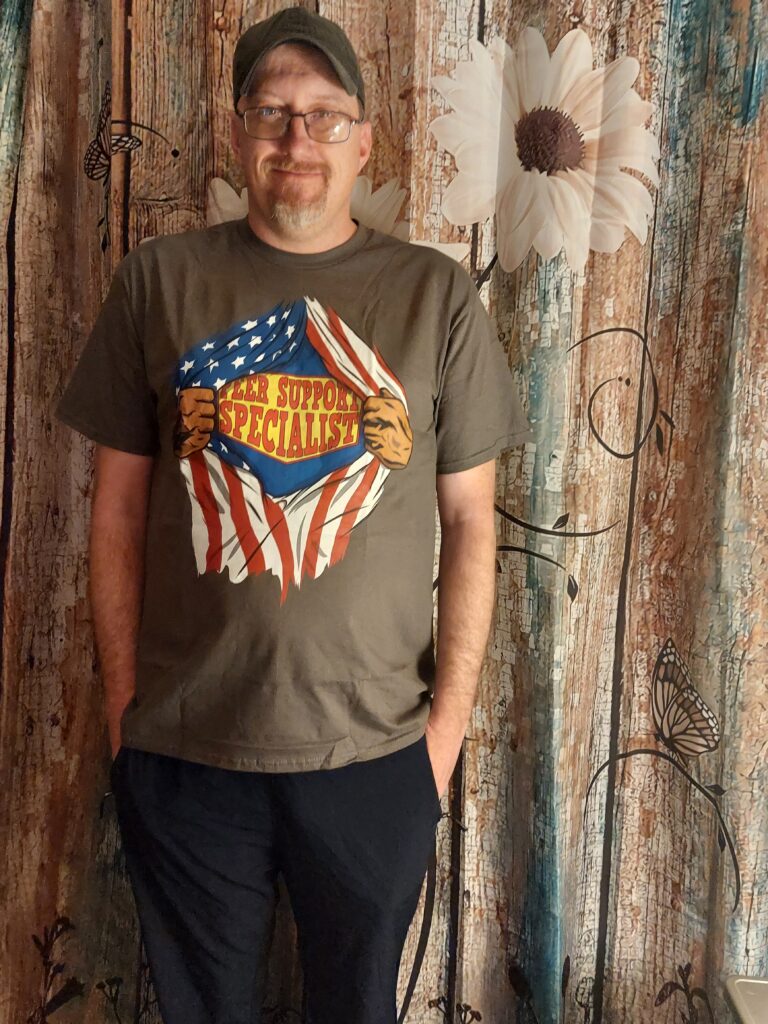
John has been a Certified Peer Recovery Specialist in the state of Iowa since 2019. John also has training in ASIST (Applied Suicide Intervention Skills Training) and is an advacate for epilepsy and mental health. John loves art, comics (Marvel especially), and the UI Hawkeyes. John lives in a small town with his brother Mario. (Dog) and his sisters Nova, Billie, Dotty, and brother Leo (Cat)
Pingback: Regenerative cells and Epilepsy - http://weirdmindwarrior.com